$500 Off Cabinet Painting
TL;DR
If you’ve ever wondered what’s the wooden board painters use, it’s commonly called a painter’s plank, walk board, scaffold plank or staging board. Professionals place these boards between scaffold frames or ladder brackets to create a stable standing platform for painting walls, siding and trim. They’re safer and more efficient than constantly moving a ladder, but homeowners should only use them with properly rated equipment and a solid understanding of scaffold safety.
Most people notice it while watching a house being painted. Instead of climbing up and down a ladder every few minutes, the painter stands on a long wooden board supported at both ends.
That board isn’t just a piece of lumber. It’s a specialized work platform that provides a wider, more stable surface for workers and their tools. Depending on the material and application, professionals may call it a:
- Painter’s plank.
- Painter’s walk board.
- Scaffold plank.
- Staging board.
- Walk board.
- Scaffold board.
Although many people still picture a wooden plank, modern painting contractors often use aluminum or engineered planks because they’re lighter, stronger and easier to transport.
Understanding the differences helps homeowners recognize why professionals choose one type over another and why proper setup matters as much as the board itself.
What's the Wooden Board Painters Use?
The traditional version is a wooden scaffold plank. It’s a long, heavy duty board designed specifically for scaffolding. Unlike ordinary construction lumber, scaffold planks must meet structural requirements and are intended to carry people, paint and equipment while spanning between supports.
The board creates a continuous walking surface, allowing painters to:
Paint large walls without repositioning a ladder. Reach soffits and fascia comfortably. Cut in long rooflines. Apply consistent finishes. Carry supplies while working.
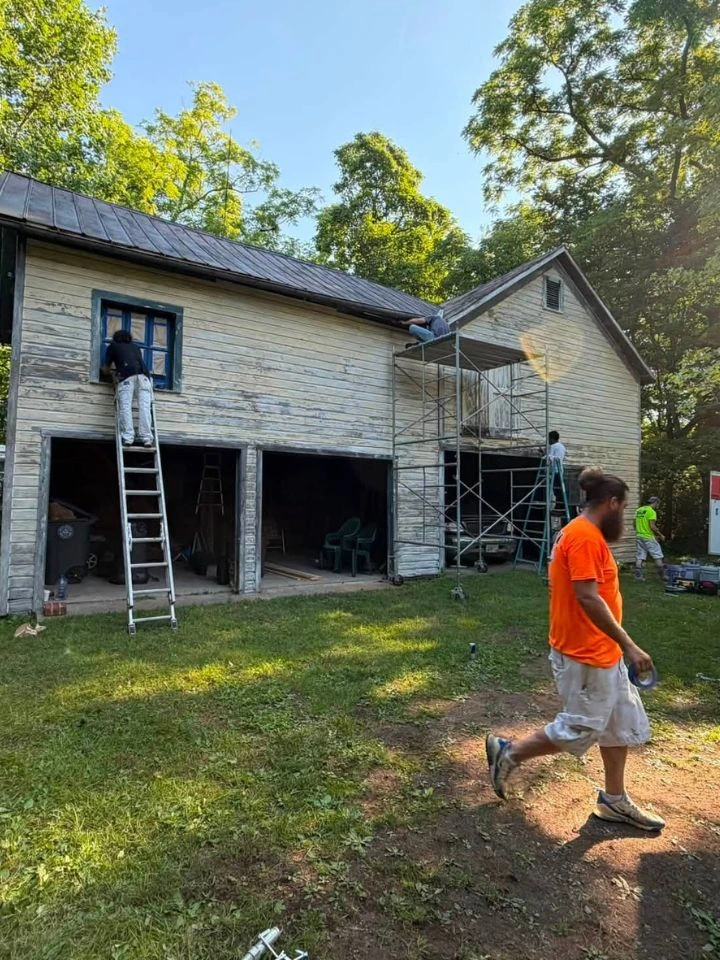
Professional painters don’t simply balance a board between two ladders. Walk boards are typically installed on scaffold systems or ladder brackets designed to support the platform safely.
The right setup depends on the building height, wall condition and type of project. For a one story ranch home, extension ladders may be sufficient. For long exterior walls or commercial buildings, scaffolding with walk boards usually provides a safer and more productive solution.
Different Types of Painter Walk Boards
Not every painter uses the same platform. Today’s contractors choose from several options based on the job.
1. Wooden Scaffold Plank
This is the classic version most homeowners recognize. Wooden scaffold planks are usually manufactured from high quality lumber selected for strength and consistency. They provide a solid working surface and have been used for decades on residential and commercial projects.
Advantages
- Familiar and easy to use.
- Solid footing.
- Less slippery than some metal surfaces.
- Often lower initial cost.
Disadvantages
- Heavy Can absorb moisture.
- Requires regular inspection.
- May warp, split or crack over time.
Never replace scaffold planks with standard framing lumber from a home improvement store. Regular 2×10 or 2×12 boards aren’t intended to function as scaffold platforms.
2. Aluminum Walk Board
Many professional painting companies now prefer aluminum walk boards. These platforms are engineered specifically for scaffolding and often include non slip decking, reinforced side rails and end hooks that lock securely into compatible scaffold systems.
Advantages
- Lightweight.
- Extremely durable.
- Won’t warp.
- Resistant to moisture.
- Easier to transport.
- Longer service life.
Disadvantages
- Higher purchase price.
- Can become slippery if covered with paint or debris.
- Conducts electricity, making power line awareness essential.
For contractors who use scaffolding daily, aluminum often becomes the more economical choice over time because it requires less maintenance.
3. Laminated Scaffold Planks
Engineered laminated planks combine multiple layers of wood under controlled manufacturing conditions. The result is a stronger, more consistent product with predictable structural performance. Compared with solid lumber, laminated boards often resist twisting and splitting more effectively.
Many commercial contractors prefer laminated planks when working on larger projects where repeated use demands greater consistency.
4. OSHA Approved Scaffold Boards
One important point often gets overlooked. Professionals don’t simply buy any board that looks sturdy. Scaffold platforms should meet applicable OSHA safety requirements and manufacturer specifications for load capacity and intended use.
Every component matters:
- Platform.
- Scaffold frame.
- Brackets.
- Guardrails.
- Connections.
- Base supports.
A strong plank doesn’t make an unsafe scaffold safe. The entire system must work together.
Book Free estimate now!
Schedule a free estimate with our experts at Trucoat Painting Plus to gain insights on your cabinet painting project.
Why Painters Use Walk Boards Instead of Only Ladders
Many homeowners assume ladders are enough. For small repairs, they often are. For painting an entire exterior, relying only on ladders quickly becomes inefficient and sometimes unsafe. Here’s why experienced painters frequently choose walk boards.
1. Better Safety
A ladder gives you one standing position. A walk board provides a wider platform where you can shift your weight naturally without climbing down every few minutes. That stability helps reduce fatigue and allows workers to maintain better balance while brushing, rolling or spraying. It also minimizes awkward reaching, one of the leading causes of falls from ladders.
2. Higher Productivity
Moving a ladder dozens of times each day consumes far more time than most homeowners realize. Imagine painting a 40-foot wall. With only a ladder, you may reposition it every few feet. With a properly installed scaffold plank, you simply walk across the platform. Less setup means more painting. That increased efficiency can significantly shorten project timelines.
3. Improved Finish Quality
Consistent body position leads to better workmanship. Instead of stretching to reach every corner, painters can stay comfortably positioned while working more efficiently. That helps produce:
- Straighter cut lines.
- More even roller coverage.
- Better spray consistency.
- Fewer missed spots.
- Cleaner trim work.
Quality isn’t only about paint. It’s also about maintaining control throughout the application.
4. Easier Access to Difficult Areas
Certain architectural features are challenging from a ladder alone. Examples include:
- Long soffits.
- Dormers.
- Wide gables.
- Tall entryways.
- Continuous fascia boards.
- Second story siding.
Walk boards allow painters to work across these areas without repeatedly climbing up and down.
How Professionals Set Up Walk Boards Safely
The board itself is only one part of the system. Safe installation requires planning, inspection and proper equipment.
1. Scaffold Systems
Professional painters commonly use:
- Frame scaffolding.
- Pumpjack scaffolding.
- Baker scaffolds for interior work.
- Ladder jack systems.
- Mobile rolling scaffolds.
Each system has different applications and manufacturer requirements. Selecting the wrong setup can create unnecessary risk.
2. Weight Limits Matter
Every scaffold platform has a rated capacity. That rating includes:
- Workers.
- Paint.
- Sprayers.
- Buckets.
- Extension cords.
- Other equipment.
Overloading a platform increases stress on every component. Professionals always stay within the manufacturer’s specified limits.
3. Regular Inspections
Before work begins, experienced painters inspect:
- Planks
- Brackets
- Fasteners
- Guardrails
- Wheels
- Locks
- Connections
- Base supports
Damaged components are removed from service immediately. Even a small crack can compromise structural integrity under load.
4. Stable Ground Is Essential
The strongest scaffold won’t remain safe on unstable footing. Professionals avoid placing scaffolding on:
- Loose soil.
- Mud.
- Ice.
- Uneven slopes.
- Soft landscaping.
Proper leveling is one of the first steps before anyone climbs onto the platform.
Book Free estimate now!
Schedule a free estimate with our experts at Trucoat Painting Plus to gain insights on your cabinet painting project.
Common Mistakes
Unsafe practices often include:
- Using ordinary lumber instead of scaffold planks.
- Exceeding weight limits.
- Skipping inspections.
- Improperly securing ladder brackets.
- Working near overhead power lines.
- Standing on makeshift platforms.
- Reaching too far beyond the platform edge.
Most accidents happen because safety procedures were ignored, not because the equipment failed.
Can Homeowners Use One?
The answer depends on the project and your experience. For some single story maintenance work, a properly installed walk board may improve comfort. For larger jobs, professional equipment and training become much more important.
Benefits
A walk board can:
- Reduce ladder repositioning.
- Increase working comfort.
- Make long painting sessions less tiring.
- Improve access to broad wall sections.
When used correctly, it can make repetitive painting tasks much easier.
Drawbacks
Scaffolding requires:
- Assembly.
- Inspection.
- Proper leveling.
- Correct bracing.
- Safe climbing practices.
It also takes more time to set up than a single ladder. For homeowners tackling one weekend project, that added complexity may outweigh the benefits.
Safety Concerns
Many DIY accidents occur because people underestimate scaffold safety. Common issues include:
- Improper assembly.
- Missing guardrails.
- Incorrect plank placement.
- Using damaged equipment.
- Working in windy conditions.
If you’re unfamiliar with scaffolding, renting equipment doesn’t automatically make the job safe. Learning how each component functions is just as important.
When You Shouldn’t Use One
A walk board isn’t the best choice when:
- The ground is steep or unstable.
- The project is near power lines.
- The work area is exposed to strong wind.
- You don’t understand scaffold assembly.
- The painting requires multiple platform heights.
- The structure has unusual rooflines or difficult access.
In those situations, hiring experienced painters is usually the safer option.
Book Free estimate now!
Schedule a free estimate with our experts at Trucoat Painting Plus to gain insights on your cabinet painting project.
Walk Boards vs. Extension Ladders
Many painting projects use both tools rather than choosing one over the other.
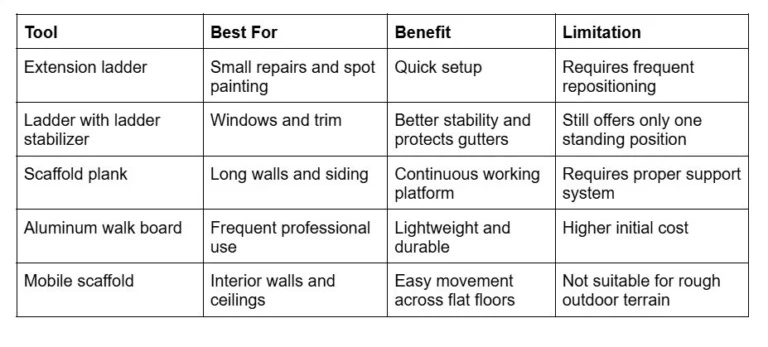
Professional painters often combine extension ladders, ladder stabilizers and scaffolding depending on the home’s layout.
Conclusion
If you’ve been asking what’s the wooden board painters use, the answer is usually a painter’s plank, scaffold plank or walk board. While the names vary, the purpose remains the same: providing a safer, more stable platform for painting elevated surfaces efficiently.
Modern professionals choose between wooden, laminated and aluminum boards based on the project, always pairing them with properly rated scaffolding and following established safety practices. For homeowners, understanding how these systems work can help you make better decisions about tackling a project yourself or hiring experienced professionals.
When an exterior or interior painting project requires specialized access equipment, the team at Trucoat Painting Plus can recommend the safest and most efficient approach for your home. Whether you’re planning a full repaint or simply gathering information before hiring a contractor, asking about the equipment and safety methods being used is always a smart place to start.