$500 Off Cabinet Painting
Painting costs are one of the first questions homeowners ask before starting a project. If you’re wondering how much do painters charge per hour, the short answer is that professional painters in the Cleveland area commonly charge between $40 and $80 per hour per painter for residential work. Some highly specialized jobs, difficult surfaces or premium contractors may charge more, while unusually low rates often come with trade offs in experience, insurance or workmanship.
That hourly number, however, rarely tells the whole story. Most reputable painting contractors price complete projects instead of billing strictly by the hour because it gives homeowners a clearer expectation of the total cost. Understanding how hourly labor fits into an estimate can help you compare quotes fairly, avoid surprises and choose a contractor based on value instead of price alone.
Key Facts
| Typical hourly rate in Cleveland | Around $40 to $80 per painter per hour, depending on experience, project complexity and overhead. |
| What affects pricing? | Surface preparation, room size, paint type, repairs, accessibility, weather and project scope. |
| Most common pricing method | Fixed price project estimates rather than hourly billing. |
| Are materials included? | Usually included in fixed price quotes, but not always with hourly work. Always ask. |
| Best way to compare estimates | Compare the complete scope of work, preparation, paint products, warranties, insurance and cleanup, not just the final price. |
Why Hourly Rates Vary So Much
Many homeowners expect every painting company to charge roughly the same hourly rate. In reality, two estimates can differ significantly even when the project appears similar. That’s because you’re paying for much more than someone applying paint to a wall. A professional painting contractor must cover expenses such as:
- Employee wages.
- Workers’ compensation insurance.
- General liability insurance.
- Vehicles and fuel.
- Professional equipment.
- Ladders and scaffolding.
- Surface preparation materials.
- Business licensing where applicable.
- Office and scheduling staff.
- Warranty service.
- Ongoing training.
These operating costs vary from one company to another, which is why hourly rates aren’t standardized across Cleveland, Cuyahoga County or the rest of Ohio.
What Does an Hourly Painting Rate Usually Include?
One of the biggest misconceptions is that you’re paying only for the time a brush touches the wall. A professional painter’s hourly rate often includes several essential steps that determine how long the finish lasts.
Typical labor includes:
- Moving and protecting furniture.
- Covering floors.
- Masking trim and fixtures.
- Cleaning surfaces.
- Sanding rough areas.
- Filling nail holes.
- Caulking gaps.
- Spot priming repairs.
- Applying paint.
- Touch ups.
- Daily cleanup.
- Final inspection.
For exterior projects, labor may also include:
- Scraping peeling paint.
- Minor wood preparation.
- Caulking exterior joints.
- Protecting landscaping.
- Ladder setup.
- Safety procedures.
Skipping these steps may reduce labor hours, but it often shortens the life of the paint job.
Book Free estimate now!
Schedule a free estimate with our experts at Trucoat Painting Plus to gain insights on your cabinet painting project.
Are Paint and Materials Included?
The answer depends on how the contractor structures the estimate.
Hourly Projects
With hourly billing, materials are frequently billed separately. Homeowners may see charges for:
- Paint
- Primer
- Caulk
- Plastic sheeting
- Tape
- Rollers
- Brushes
- Sandpaper
- Patching compounds
Some contractors ask homeowners to purchase the paint directly, while others buy it and include a markup to cover ordering, transportation and warranty responsibility.
Fixed Price Projects
For complete interior painting or exterior painting projects, materials are often included in the total proposal. The estimate typically specifies:
- Brand of paint.
- Product line.
- Number of coats.
- Primer requirements.
- Paint finish.
- Surface preparation.
- Cleanup.
Always read the estimate carefully instead of assuming materials are included.
Hourly Pricing vs. Fixed Project Pricing
Most experienced painting contractors prefer fixed pricing because it provides more certainty for both the homeowner and the contractor.
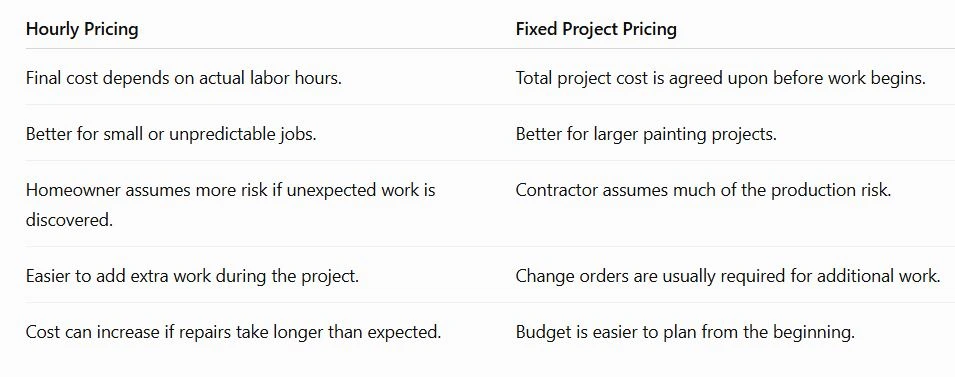
For an entire home repaint, fixed pricing is usually the better option because homeowners know the expected investment before work starts.
When Hourly Pricing Can Actually Save You Money
Many online articles suggest avoiding hourly billing altogether. That isn’t always good advice. There are situations where hourly pricing can work in a homeowner’s favor.
1. Small Touch Up Projects
If you need a few walls repainted after a remodel, paying hourly may cost less than a contractor’s minimum project charge.
2. Punch List Work
After replacing windows, repairing drywall, or installing built in shelving, an hourly painter can complete several small tasks in one visit.
3. Minor Drywall Repairs
Small Drywall Repair projects often vary once damaged areas are opened. Charging hourly can be more practical than guessing repair time in advance.
4. Color Changes in One Room
A straightforward bedroom repaint with minimal furniture and good wall condition may be completed efficiently without requiring a detailed fixed price proposal.
The key is asking for an estimate of expected labor hours before work begins.
Book Free estimate now!
Schedule a free estimate with our experts at Trucoat Painting Plus to gain insights on your cabinet painting project.
Factors That Have the Biggest Impact on Painting Labor Costs
Homeowners often focus on square footage, but experienced painters know several other factors have just as much influence on labor time.
1. Surface Preparation
Preparation usually determines whether a paint job lasts five years or fifteen. Preparation may include:
- Washing surfaces.
- Sanding glossy finishes.
- Scraping peeling paint.
- Filling dents.
- Repairing cracks.
- Caulking trim.
- Priming stains.
Older homes often require significantly more preparation than newer construction.
2. Number of Coats Required
Changing from a dark color to white generally takes more labor than repainting a similar shade.
Deep reds, bright yellows, navy blues and some premium colors may require:
- Additional primer.
- Extra drying time.
- More finish coats.
That increases labor hours regardless of room size.
3. Ceiling Height
Painting standard eight foot ceilings is much faster than working in:
- Two story foyers.
- Vaulted great rooms.
- Stairwells.
- Open entryways.
Additional setup, ladder movement and safety precautions all add labor time.
4. Paint Quality
Higher quality products from manufacturers such as Sherwin Williams or Benjamin Moore often provide better coverage and durability. In some cases, premium paints reduce the number of coats required, while specialty coatings or deep colors can increase labor.
Choosing paint solely based on the lowest price can lead to more frequent repainting over time.
5. Occupied vs. Empty Homes
An empty house is generally faster to paint. Occupied homes require painters to:
- Move furniture carefully.
- Protect belongings.
- Work around family schedules.
- Keep rooms usable during the project.
Those additional steps naturally increase labor time.
6. Accessibility
Exterior painting becomes more labor intensive when a home includes:
- Steep rooflines.
- Multiple stories.
- Limited ladder access.
- Extensive trim.
- Dormers.
- Large covered porches.
The more time spent setting up and moving equipment, the more labor is involved.
Book Free estimate now!
Schedule a free estimate with our experts at Trucoat Painting Plus to gain insights on your cabinet painting project.
Cleveland Weather Plays a Bigger Role
Ohio’s changing seasons affect more than just scheduling. Exterior painting projects in Cleveland must account for:
- Rain delays.
- High humidity.
- Cooler spring mornings.
- Hot summer afternoons.
- Shorter fall daylight hours.
- Temperature requirements for primers and finish coats.
Professional painters often adjust daily schedules around weather forecasts to achieve proper curing conditions. Painting outside during unfavorable weather can slow production or affect long term paint performance.
For interior projects, weather still matters. High humidity can extend drying times, while winter heating systems may reduce humidity enough to improve drying, provided proper ventilation is maintained.
Hidden Costs Homeowners Often Overlook
The hourly rate is only one part of the total cost. Two painters may charge the same hourly rate but produce very different final invoices because of work that wasn’t discussed before the project started. Before signing a contract, ask whether the following items are included.
1. Extensive Surface Repairs
Most estimates assume walls and trim are in reasonably good condition. If the crew discovers:
- Water damage.
- Loose drywall tape.
- Large holes.
- Rotten exterior wood.
- Damaged trim.
Additional labor and materials may be required. A reputable contractor should explain the issue and provide a change order before completing extra work.
2. Color Changes
Painting a light wall with another light color is usually straightforward. Changing from:
- Dark gray to white.
- Bright red to beige.
- Navy blue to light gray.
Often requires additional primer or extra finish coats. This increases both labor and material costs.
3. Furniture Moving
Some contractors include moving standard furniture. Others expect homeowners to remove:
- Electronics.
- Artwork.
- Fragile decorations.
- Bookcases.
- Oversized furniture.
Clarify responsibilities before work begins.
4. Accent Walls and Detailed Trim
Painting a single accent wall sounds simple, but cutting crisp paint lines often takes longer than painting an entire wall one color.
Detailed trim, crown molding, built in shelving and decorative millwork also require more labor than flat walls.
5. Paint Upgrades
Most contractors include a specific paint product in their estimate. Upgrading to premium coatings or specialty finishes may increase the overall project cost.
Always ask which product line is included, not just the paint manufacturer.