$500 Off Cabinet Painting
Choosing the right Bathroom Ceiling Paint matters more than most homeowners realize. Professional painters typically use moisture resistant acrylic paints with mold and mildew resistant additives because bathroom ceilings face constant humidity, condensation and temperature swings that standard ceiling paints are not built to handle. At Trucoat Painting Plus, we often see bathroom ceilings fail years before other painted surfaces because the wrong products were used.
TL;DR
- Use a high quality acrylic latex paint formulated for bathrooms and high moisture areas.
- Satin is the finish most professional painters choose for bathroom ceilings.
- Standard flat ceiling paint often absorbs moisture and fails prematurely.
- Paint alone cannot prevent mold if ventilation problems remain.
- Always clean, repair and prime stained or damaged ceilings before painting.
- Use mildew resistant coatings in bathrooms with showers or poor airflow.
- Allow proper drying and curing times before exposing the ceiling to steam.
- Exhaust fans are just as important as paint selection.
What Makes Bathroom Ceilings Different From Other Rooms?
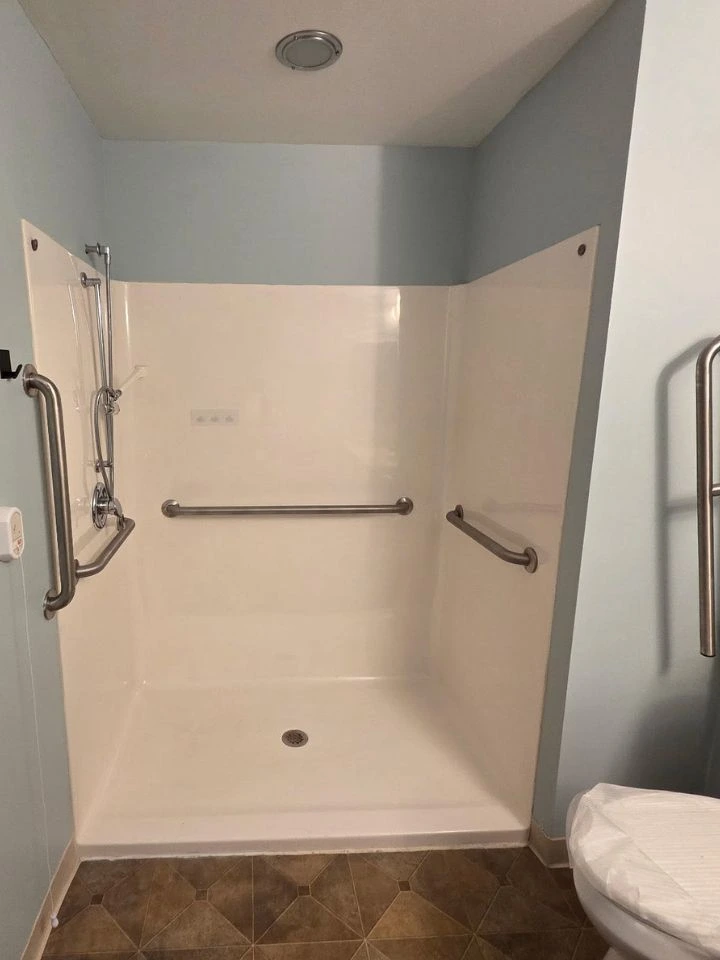
Bathroom ceilings experience conditions that most ceilings never encounter.
Every shower creates warm, humid air that rises directly toward the ceiling. That moisture repeatedly condenses on painted surfaces. Over time, the ceiling expands and contracts while moisture works its way into tiny imperfections in the paint film.
In a living room, a ceiling may remain dry for years. In a bathroom, the ceiling can become damp several times per day.
This difference explains why a paint product that performs well in a bedroom may fail quickly in a bathroom.
Common issues painters encounter include:
- Peeling paint above showers.
- Yellow or brown stains around exhaust fans.
- Mold spots in ceiling corners.
- Water streaking.
- Soft paint films that never fully harden.
- Bubbling coatings caused by trapped moisture.
Many homeowners assume these problems are caused by poor painting alone. In reality, moisture management plays a major role.
Moisture & Humidity Challenges
Bathrooms create a unique environment. Hot showers generate steam that rises immediately to the ceiling. When that steam cools, condensation forms on painted surfaces. Over time, repeated moisture exposure can:
- Weaken paint adhesion.
- Encourage mildew growth.
- Create staining.
- Cause peeling.
- Increase surface discoloration.
The areas most vulnerable include:
- Above shower enclosures.
- Around recessed lighting.
- Ceiling corners.
- Around exhaust fans.
- Areas near exterior walls.
These are often the first places professional painters inspect when evaluating a failing bathroom ceiling.
Book Free estimate now!
Schedule a free estimate with our experts at Trucoat Painting Plus to gain insights on your cabinet painting project.
Why Standard Ceiling Paint Often Fails
Many standard ceiling paints are formulated for low moisture rooms. Traditional flat ceiling paint can absorb moisture repeatedly. Once moisture penetrates the paint film, problems often begin.
Professionals frequently see:
1. Peeling Above Showers
Steam exposure weakens paint adhesion. Eventually, paint begins lifting away from the drywall.
2. Water Staining
Condensation can carry contaminants and leave visible stains. This commonly occurs around exhaust fans.
3. Mold Growth
Flat paints often provide limited resistance to moisture related microbial growth. Dark spots frequently appear in corners and poorly ventilated areas.
4. Soft Paint Surfaces
Some paints remain vulnerable to repeated humidity exposure and become difficult to clean.
This is one reason many professionals avoid generic ceiling paints in bathrooms.
What Type of Bathroom Ceiling Paint Do Professional Painters Use?
When selecting Bathroom Ceiling Paint, professionals typically prioritize durability over appearance alone. The products most commonly used today share several characteristics:
- Acrylic latex formulation.
- Mildew resistant additives.
- Washable finish.
- Strong adhesion.
- Moisture resistance.
- Good color retention.
The goal is to create a coating that withstands years of humidity exposure without peeling or supporting mildew growth.
Best Paint Finishes
The finish affects performance as much as the paint itself. Professional painters generally avoid extreme finishes.
- Very flat finishes can absorb moisture.
- High gloss finishes can highlight every ceiling imperfection.
Most contractors choose finishes that provide a balance between durability and appearance.
Best Paint Features to Look For
When evaluating paint for bathroom ceilings, look for:
1. Moisture Resistance
The coating should resist repeated humidity exposure.
2. Mildew Resistance
Products with built in mildew resistant technology provide additional protection.
3. Washability
Bathroom ceilings occasionally require cleaning.
4. Strong Adhesion
Good adhesion reduces peeling risks.
5. Low Porosity
A tighter paint film helps reduce moisture penetration.
Common Professional Recommendations
Professional painters commonly recommend:
- Acrylic latex bathroom paints.
- Kitchen and bath formulations.
- Premium interior paints with mildew resistance.
- Products specifically rated for high humidity environments.
These products typically outperform standard ceiling paints over the long term.
Book Free estimate now!
Schedule a free estimate with our experts at Trucoat Painting Plus to gain insights on your cabinet painting project.
Flat, Matte, Eggshell, Satin or Semi Gloss: Which Finish Works Best?
The choice of bathroom paint finish is one of the most common questions homeowners ask when planning a bathroom painting project. In practice, most professionals consistently favor satin for bathroom ceilings.
Flat
- Moisture Resistance: Low
- Washability: Low
- Appearance: Hides imperfections well
- Professional Recommendation: Rarely recommended
Matte
- Moisture Resistance: Moderate
- Washability: Moderate
- Appearance: Smooth appearance
- Professional Recommendation: Acceptable in low humidity bathrooms
Eggshell
- Moisture Resistance: Moderate High
- Washability: Good
- Appearance: Slight sheen
- Professional Recommendation: Good option
Satin
- Moisture Resistance: High
- Washability: Very Good
- Appearance: Subtle sheen
- Professional Recommendation: Most commonly recommended
Semi Gloss
- Moisture Resistance: Very High
- Washability: Excellent
- Appearance: Reflective
- Professional Recommendation: Usually reserved for problem bathrooms
Pros and Cons of Each Finish
1. Flat
Pros
- Excellent at hiding flaws.
- Traditional ceiling appearance.
Cons
- Absorbs moisture.
- Difficult to clean.
- More susceptible to failure.
2. Matte
Pros
- Better durability than flat.
- Low sheen.
Cons
- Less moisture resistant than satin.
3. Eggshell
Pros
- Easy to maintain.
- Attractive appearance.
Cons
- Can reveal imperfections.
4. Satin
Pros
- Strong moisture resistance.
- Easy cleaning.
- Good durability.
Cons
- Slightly highlights surface defects.
5. Semi Gloss
Pros
- Maximum washability.
- Excellent moisture protection.
Cons
- Shows imperfections dramatically.
What Professionals Choose Most Often
For most bathrooms, satin provides the best balance. It offers better moisture resistance than flat paint without creating excessive surface reflection.
This is why many professionals consider satin the safest recommendation for most homeowners.
Book Free estimate now!
Schedule a free estimate with our experts at Trucoat Painting Plus to gain insights on your cabinet painting project.
Mold and Mildew Resistance
Many homeowners search for mold resistant ceiling paint expecting paint alone to solve mold problems. Unfortunately, that is not how mold works. Paint can help. Ventilation remains the primary defense.
How Mold Develops
Mold requires:
- Moisture.
- Organic material.
- Limited airflow.
Bathrooms often provide all three. Poorly ventilated bathrooms are particularly vulnerable.
Common warning signs include:
- Black corner spots.
- Ceiling discoloration.
- Persistent musty odors.
- Staining around vents.
Paint Features That Help Prevent Problems
Several coatings contain:
- Mildew resistant paint technology.
- Antimicrobial additives.
- Moisture resistant ingredients.
These features make the paint film less hospitable to mildew growth.
Products marketed as anti mold paint or mildew resistant paint can help reduce risk. However, they cannot overcome persistent moisture issues.
The Importance of Ventilation
An exhaust fan removes humid air before condensation forms. Without proper ventilation:
- Paint life decreases.
- Mold risk increases.
- Peeling becomes more likely.
A bathroom fan should continue running for at least 20 to 30 minutes after showering. Paint works best when ventilation is functioning properly.
Best Bathroom Ceiling Paint Products in 2026
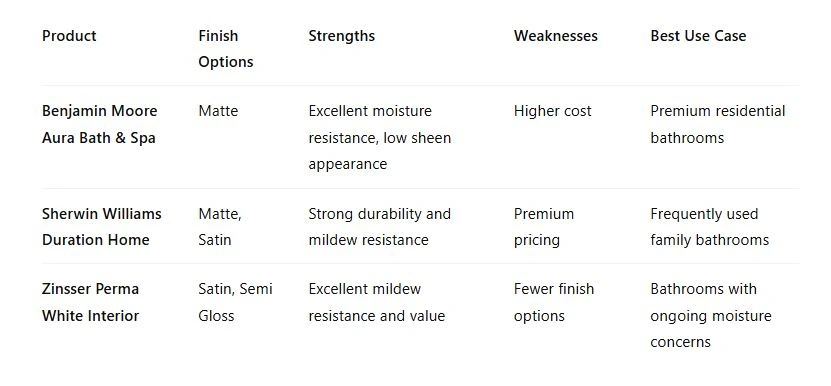
The following products are commonly recommended by professional painters because they consistently perform well in high moisture environments.
Best Overall
Sherwin Williams Duration Home
Why painters recommend it:
- Durable finish.
- Good moisture resistance.
- Excellent washability.
- Strong long term performance.
Best Premium Option
Benjamin Moore Aura Bath & Spa
Why painters recommend it:
- Specifically formulated for bathrooms.
- Attractive low sheen appearance.
- Excellent durability.
Best Value Option
Zinsser Perma White Interior
Why painters recommend it:
- Strong mildew resistance.
- Reasonable cost.
- Good performance in problem bathrooms.
Book Free estimate now!
Schedule a free estimate with our experts at Trucoat Painting Plus to gain insights on your cabinet painting project.
Common Bathroom Ceiling Painting Mistakes
Many cases of bathroom ceiling peeling paint can be traced back to avoidable mistakes.
1. Using Standard Flat Ceiling Paint
Why It Happens
Homeowners assume all ceilings require flat paint.
Problems It Causes
- Moisture absorption.
- Early peeling.
- Reduced durability.
Professional Prevention
Use moisture resistant bathroom coatings instead.
2. Skipping Primer
Why It Happens
Homeowners want to save time.
Problems It Causes
- Adhesion issues.
- Stain bleed through.
- Uneven finish.
Professional Prevention
Prime repaired, stained or bare surfaces.
3. Painting Over Existing Mildew
Why It Happens
Mildew may appear minor.
Problems It Causes
- Continued growth.
- Staining.
- Premature failure.
Professional Prevention
Clean and treat affected areas before painting.
4. Ignoring Ventilation Problems
Why It Happens
Paint receives the blame.
Problems It Causes
- Recurring mold.
- Repeated peeling.
- Reduced paint lifespan.
Professional Prevention
Address airflow deficiencies before repainting.
Book Free estimate now!
Schedule a free estimate with our experts at Trucoat Painting Plus to gain insights on your cabinet painting project.
How to Paint a Bathroom Ceiling Correctly
Choosing the right Bathroom Ceiling Paint matters, but application is equally important.
1. Surface Preparation
- Remove dust and dirt.
- Wash surfaces with a mild cleaning solution.
- Remove mildew completely.
- Repair cracks and damaged drywall.
- Sand rough areas smooth.
Preparation often determines whether the paint lasts two years or ten years.
2. Priming
Prime when:
- Stains are present.
- Drywall repairs were made.
- Existing paint is damaged.
- Water damage occurred.
Use a quality stain blocking primer when necessary.
3. Application Tips
- Cut in edges first.
- Use a quality roller cover.
- Apply thin, even coats.
- Maintain a wet edge.
- Apply a second coat if recommended.
Avoid painting during extremely humid conditions.
4. Drying and Curing
Drying and curing are not the same. Paint may feel dry within hours but continue curing for weeks. For best results:
- Follow manufacturer recommendations.
- Avoid excessive steam immediately after painting.
- Run exhaust fans regularly.
Proper curing improves long term durability.
Frequently Asked Questions
Can I use regular ceiling paint in a bathroom?
You can, but it often performs poorly in humid environments. Specialized bathroom products typically last longer.
Is satin or flat better for bathroom ceilings?
Most professionals prefer satin because it provides better moisture resistance and washability.
Does mold resistant ceiling paint stop mold completely?
No. Paint helps reduce risk, but ventilation and moisture control remain essential.
How often should a bathroom ceiling be repainted?
Most quality paint systems last between 5 and 10 years depending on humidity levels and ventilation.
What causes peeling paint above a shower?
Excess moisture, poor surface preparation, inadequate ventilation and incompatible coatings are the most common causes.
Should I prime before repainting a bathroom ceiling?
Yes, especially when stains, repairs, peeling paint or water damage are present.
What is the best ceiling paint for humidity?
Premium acrylic bathroom paints with mildew resistant technology typically perform best in humid conditions.
Conclusion
The right Bathroom Ceiling Paint combines moisture resistance, mildew protection, proper finish selection and correct application practices. Satin remains the finish most professional painters recommend because it balances durability, appearance and maintenance. Equally important are surface preparation, proper priming and adequate ventilation. Homeowners who address all of these factors generally experience fewer moisture related failures and longer lasting results. At Trucoat Painting Plus, we have seen that bathrooms with quality paint and effective ventilation consistently outperform those that rely on paint alone.