$500 Off Cabinet Painting
Exterior stucco paint typically lasts 7 to 15 years, depending on the quality of the paint, the condition of the stucco, surface preparation, weather exposure and ongoing maintenance. Homes exposed to harsh sun, moisture or repeated freeze thaw cycles often require repainting sooner than homes in milder climates.
TL;DR
Typical lifespan: 7 to 15 years, with premium coatings often lasting longer under ideal conditions.
Biggest durability factors: Surface preparation, paint quality, moisture control, sun exposure and climate.
Signs it’s time to repaint: Fading, peeling, cracking, chalking, water absorption or widespread hairline cracks.
Best recommendation: Repair damaged stucco, address moisture issues and use a high quality coating designed specifically for masonry surfaces.
Stucco is one of the most durable exterior finishes available, but it relies on a protective paint system to resist moisture, sunlight and weather. While the stucco itself may last for decades, the paint covering it gradually breaks down from environmental exposure.
Many homeowners assume paint fails only because of age. In reality, paint often wears out because moisture, movement or improper preparation weakens the coating long before its expected lifespan.
Understanding what affects longevity helps homeowners schedule repainting before significant damage develops. A well timed repaint protects both the appearance and structural integrity of a stucco house while preventing expensive repairs later.
What Determines the Lifespan of Exterior Stucco Paint?
Unlike wood siding or vinyl, stucco is a cement based material that constantly expands and contracts with temperature changes. The paint must move with the surface while continuing to block moisture and withstand ultraviolet light.
Professional painters evaluate far more than the paint’s age before recommending repainting.
Why stucco behaves differently than other siding materials
Stucco naturally contains tiny pores that allow moisture vapor to move through the wall. Paint must balance two important jobs:
- Keep rain from soaking into the wall.
- Allow trapped moisture vapor to escape.
If the wrong coating is used, moisture may become trapped beneath the paint film, eventually leading to bubbling, peeling or cracking.
Several factors determine how long exterior stucco paint performs effectively.
- Quality of the coating.
- Surface preparation before painting.
- Previous paint condition.
- Moisture exposure.
- Sunlight intensity.
- Building orientation.
- Local climate.
- Maintenance over time.
Even two neighboring homes can experience very different paint lifespans because of shade, drainage, landscaping or exposure to prevailing winds.
What Factors Affect How Long Stucco Paint Lasts?
No single factor determines paint longevity. Instead, multiple conditions work together over many years.
1. Paint quality matters more than many homeowners realize
Premium coatings contain higher quality resins, pigments and additives that resist fading, moisture and cracking more effectively.
Lower quality paints may initially look attractive but often lose flexibility sooner, allowing small cracks to appear.
Common coating choices include:
- High quality acrylic paint.
- Elastomeric paint.
- Masonry paint designed for cementitious surfaces.
Each has advantages depending on the condition of the stucco.
2. Surface preparation often determines success
Experienced painters frequently see coatings fail because preparation was rushed rather than because the paint itself was poor.
Proper preparation includes:
- Cleaning dirt and mildew.
- Removing loose paint.
- Repairing cracks.
- Allowing repairs to cure.
- Priming when appropriate.
Painting over damaged stucco will almost always reduce the lifespan of the new coating.
3. Moisture is the biggest enemy
Water entering behind painted stucco slowly weakens adhesion. Common moisture sources include:
- Roof leaks.
- Missing caulk.
- Poor drainage.
- Sprinklers regularly hitting walls.
- Cracked window seals.
- Clogged gutters.
Simply repainting without correcting moisture problems rarely solves peeling paint.
4. Sun exposure gradually breaks down paint
Ultraviolet rays slowly degrade paint binders. South facing and west facing walls generally receive the strongest sunlight throughout the day. These elevations often fade faster than shaded areas.
Dark colors usually absorb more heat, increasing expansion and contraction of the coating.
Book Free estimate now!
Schedule a free estimate with our experts at Trucoat Painting Plus to gain insights on your cabinet painting project.
How Ohio's Climate Affects Paint Longevity
Climate has a major influence on painted stucco, particularly in states with four distinct seasons.
Seasonal weather creates repeated stress on painted surfaces
Ohio experiences a combination of conditions that challenge exterior coatings throughout the year. These include:
- Hot, humid summers.
- Strong UV exposure.
- Heavy spring rainfall.
- High humidity.
- Cold winters.
- Snow accumulation.
- Ice formation.
- Frequent freeze thaw cycles.
One of the most significant concerns is repeated freezing and thawing. Tiny cracks in stucco can absorb moisture during wet weather. As temperatures drop below freezing, trapped water expands. Over multiple winters, this gradual movement widens cracks, weakens the paint film and increases the chance of peeling.
Humidity also slows drying after rain, allowing damp surfaces to remain wet longer. Homes surrounded by mature trees may experience additional moisture retention because shaded walls dry more slowly after storms.
These environmental factors explain why two homes painted in the same year can age differently based on their location and exposure.
How to Maximize the Lifespan of Exterior Stucco Paint
The best way to extend paint life begins long before the first coat is applied.
Professional recommendations for long lasting results. According to Trucoat Painting Plus, long lasting paint systems depend on careful preparation just as much as premium products.
Following a systematic process improves durability.
- Inspect the entire stucco surface.
- Repair all cracks before painting.
- Wash away dirt, mildew and chalking.
- Allow surfaces to dry completely.
- Prime repaired areas if needed.
- Apply premium masonry compatible coatings.
- Follow manufacturer drying times.
- Inspect annually for small repairs.
Small maintenance projects often prevent larger repainting expenses later.
Homeowners should also:
- Trim vegetation away from walls.
- Keep gutters functioning properly.
- Redirect sprinklers away from stucco.
- Repair damaged caulk promptly.
- Clean mildew before it spreads.
These simple maintenance habits significantly reduce premature coating failure.
Book Free estimate now!
Schedule a free estimate with our experts at Trucoat Painting Plus to gain insights on your cabinet painting project.
Which Paints Last the Longest?
Different products perform better under different conditions. The right coating depends on the age, texture and condition of the stucco.
Comparing common coating options
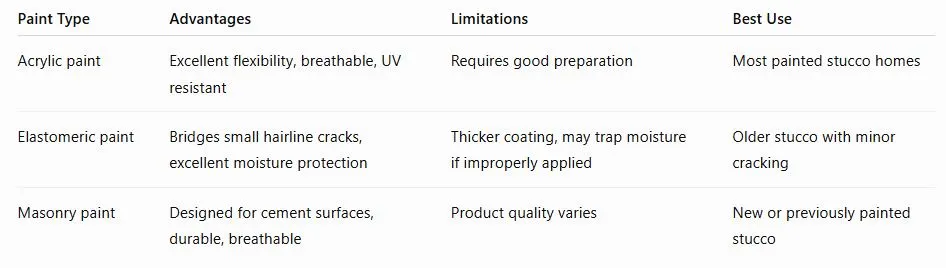
Acrylic paint remains the preferred choice for many homes because it balances flexibility, breathability and durability.
Elastomeric coatings can provide excellent protection on surfaces with numerous fine cracks, but they should only be used where moisture conditions are appropriate. Choosing the right exterior stucco paint matters just as much as selecting the right color.
Common Mistakes That Shorten Paint Life
Many premature paint failures are avoidable. Professional painters frequently identify the same installation mistakes years later.
Mistakes homeowners often make
- Painting over dirty surfaces.
- Ignoring moisture problems.
- Skipping crack repairs.
- Using interior paint outdoors.
- Choosing the lowest cost coating.
- Painting during poor weather.
- Applying paint to damp stucco.
- Ignoring manufacturer’s coverage recommendations.
Each mistake reduces the coating’s ability to protect the home.
How professionals approach the same project
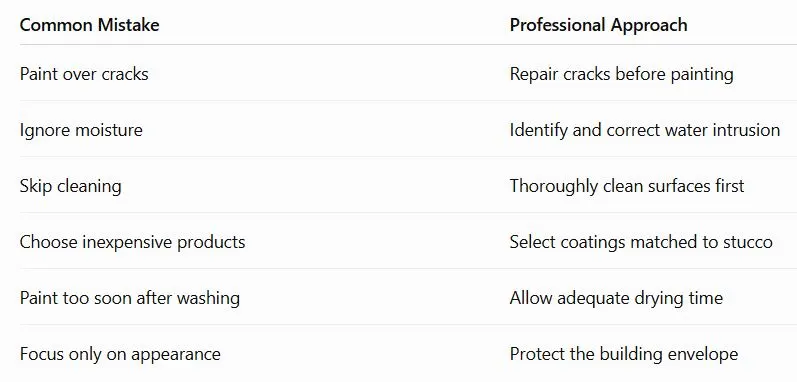
Professional painters understand that preparation determines how well exterior stucco paint performs over time.
Book Free estimate now!
Schedule a free estimate with our experts at Trucoat Painting Plus to gain insights on your cabinet painting project.
How Do You Know It's Time to Repaint?
Paint rarely fails overnight. Instead, warning signs gradually become more noticeable. Recognizing these early helps prevent more extensive repairs.
Inspection checklist
Walk around the home once or twice each year and look for:
- Noticeable fading.
- Peeling paint.
- Flaking.
- Chalking residue on your hand.
- Hairline cracks increasing in size.
- Water soaking into the wall instead of beading.
- Blistering.
- Mold or mildew growth.
- Discolored patches.
- Exposed bare stucco.
One isolated crack may require only a localized repair. Widespread deterioration across multiple walls usually indicates the coating has reached the end of its service life.
Should Stucco Be Repaired Before Painting?
Absolutely. Paint is designed to protect surfaces, not repair structural defects. Cracks allow water to reach deeper into the wall system. Simply covering them with paint rarely provides a lasting solution.
Repairs should include:
- Filling hairline cracks with compatible repair materials.
- Replacing loose stucco.
- Repairing failed sealant around windows.
- Addressing moisture entry points.
- Matching texture where repairs are visible.
Professional painters at Trucoat Painting Plus often recommend completing repairs several days before painting so repair materials have adequate time to cure. Skipping repairs usually leads to premature failure of even the highest quality exterior stucco paint.
How Often Should Homeowners Inspect Painted Stucco?
Annual inspections help catch problems while they’re still inexpensive to fix. Many issues develop slowly and remain unnoticed until paint begins peeling.
A yearly inspection should include:
- Looking closely around windows and doors.
- Examining roof intersections.
- Checking downspouts.
- Inspecting foundation transitions.
- Watching for new cracking.
- Looking for discoloration after heavy rain.
After severe storms or unusually harsh winters, another inspection is worthwhile. Ohio homeowners especially benefit from spring inspections because winter freeze thaw cycles may reveal new cracks once temperatures rise.
Book Free estimate now!
Schedule a free estimate with our experts at Trucoat Painting Plus to gain insights on your cabinet painting project.
Can Regular Maintenance Delay Repainting?
Yes. Routine maintenance often adds several years to a paint system. Helpful maintenance includes:
- Washing accumulated dirt every few years.
- Removing mildew promptly.
- Repairing minor cracks before winter.
- Maintaining gutters.
- Keeping landscaping from trapping moisture against walls.
These tasks reduce long term deterioration without requiring a full repaint. Maintenance cannot stop normal aging, but it slows many of the conditions that shorten paint life.
Is Repainting Better Than Waiting for Paint to Fail?
Generally, yes. Repainting while the existing coating is still mostly sound usually requires less preparation than waiting until widespread peeling develops.
Once paint begins failing extensively, contractors often spend much more time scraping, repairing, priming and restoring damaged surfaces. Preventive repainting protects the stucco itself and often reduces overall maintenance costs over the life of the home.
Conclusion
Most homeowners can expect exterior stucco paint to last between 7 and 15 years, although the actual lifespan depends on preparation, coating quality, maintenance, moisture exposure, and local weather conditions. Ohio’s combination of humidity, heavy rainfall, strong summer sunlight and repeated freeze thaw cycles places additional stress on painted stucco, making regular inspections especially valuable.
The best long term approach is to repair cracks promptly, correct moisture issues before painting, choose a coating designed for stucco and inspect the exterior every year. Repainting before widespread failure develops helps preserve both the appearance of the home and the condition of the underlying stucco, leading to longer lasting protection and fewer costly repairs over time.