$500 Off Cabinet Painting
If you’re wondering what the best primer for kitchen cabinets is, the short answer is this: it depends on the cabinet material and condition. A quality primer creates the foundation that allows paint to bond properly, blocks stains from bleeding through and helps your finish last for years instead of months. Whether you’re painting oak, laminate, MDF or previously painted cabinets, choosing the right primer is just as important as selecting the paint itself.
TL;DR
- The best primer for kitchen cabinets depends on the cabinet material and existing finish.
- Bonding primers work best on slick laminate and glossy surfaces.
- Shellac primers excel at blocking stains, smoke damage and wood tannins.
- Oil based primers remain an excellent choice for cabinets with heavy stains and hardwood grain.
- Latex primers are easier to use and clean up but aren’t ideal for every surface.
- Proper cleaning and preparation matter just as much as primer selection.
- Most cabinet failures happen because preparation was skipped, not because the paint was poor.
- A quality primer improves paint adhesion, durability and the final appearance.
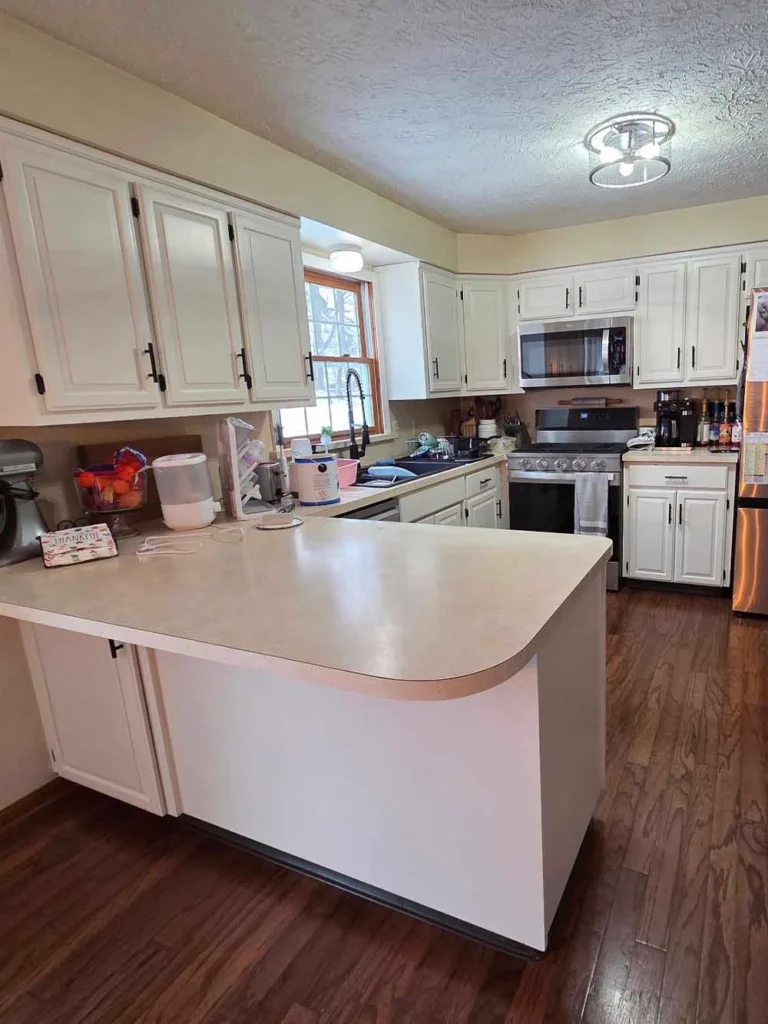
What Makes a Good Primer for Kitchen Cabinets?
Many homeowners focus entirely on choosing cabinet paint, but experienced painters know that primer determines whether the finish lasts. Even premium paint cannot compensate for poor surface preparation or an incompatible primer.
When choosing the best primer for kitchen cabinets, professionals evaluate several important characteristics before opening a can.
1. Adhesion
Kitchen cabinets receive constant abuse. Doors are opened dozens of times every day, handles collect oils from hands and cooking grease settles on surfaces over time.
A quality cabinet primer should create a strong bond between the existing cabinet surface and the new paint. This becomes especially important when working with glossy finishes, factory coatings, laminate cabinets or previously painted surfaces.
High quality bonding primer products contain resins that grip difficult surfaces where ordinary primers struggle.
2. Durability
Kitchen cabinets experience more wear than nearly any painted surface inside a home. Good primer contributes to:
- Better chip resistance.
- Improved scratch resistance.
- Longer paint life.
- Better moisture resistance.
- Reduced peeling.
Strong paint durability starts beneath the topcoat.
3. Stain Blocking
Some woods naturally release tannins long after they’ve been painted. Without a proper stain blocking primer, homeowners may notice:
- Yellow discoloration.
- Brown streaks.
- Water stains showing through.
- Smoke stains returning.
- Knot bleed.
Oak cabinets are especially prone to tannin bleed, making stain blocking an essential feature.
4. Surface Compatibility
Not every primer for kitchen cabinets works equally well across different materials. Professionals match primer to the surface:
- Hardwood.
- MDF cabinets.
- Laminate cabinets.
- Factory painted cabinets.
- Previously stained wood.
Using the wrong product can result in poor adhesion even if the cabinet appears properly painted at first.
5. Drying Time
Dry time affects scheduling, dust contamination and recoating. Faster isn’t always better.
Some shellac primers dry extremely quickly but require efficient application, while oil based products need more curing time but offer excellent stain blocking.
Understanding both dry time and cure time helps produce a smoother, more durable finish.
Types of Cabinet Primers
Different primers solve different problems. Knowing how each type performs makes selecting the best primer for kitchen cabinets much easier.
1. Oil Based Primer
For decades, professionals relied heavily on oil based primer because of its excellent adhesion and stain blocking ability.
Advantages
- Excellent durability.
- Strong stain resistance.
- Good adhesion on wood.
- Smooth sanding.
- Effective on oak cabinets.
Disadvantages
- Strong odor.
- Longer dry time.
- Mineral spirits required for cleanup.
- Higher VOCs.
Best used for
- Older wood cabinets.
- Heavy stains.
- Cabinets with smoke damage.
- Woods prone to tannin bleed.
2. Latex Primer
Modern latex primer formulations have improved dramatically.
Advantages
- Low odor.
- Easy soap and water cleanup.
- Fast drying.
- Environmentally friendlier.
- Easier for DIY projects.
Disadvantages
- Not ideal for every glossy surface.
- Some products require extensive sanding.
- Lower stain blocking performance than shellac.
Best used for
- Lightly worn cabinets.
- New wood.
- Properly sanded surfaces.
- Projects needing quick turnaround.
3. Shellac Primer
Many professionals reach for shellac primer when stain blocking is the highest priority.
Advantages
- Exceptional stain blocking.
- Fast drying.
- Excellent odor sealing.
- Strong adhesion.
- Blocks tannin bleed.
Disadvantages
- Strong fumes.
- Fast dry time leaves little working time.
- Alcohol cleanup.
- Higher cost.
Best used for
- Oak cabinets.
- Fire damage.
- Smoke damage.
- Water stains.
- Knotty wood.
4. Bonding Primer
Today’s bonding primer products are often the first recommendation for difficult surfaces.
Advantages
- Excellent adhesion.
- Minimal sanding required.
- Great for slick finishes.
- Excellent on laminate.
- Compatible with many topcoats.
Disadvantages
- Premium pricing.
- Some require longer cure times.
Best used for
- Laminate cabinets.
- Factory finishes.
- Glossy cabinets.
- Cabinet refinishing projects.
Book Free estimate now!
Schedule a free estimate with our experts at Trucoat Painting Plus to gain insights on your cabinet painting project.
Best Primer for Different Cabinet Materials
Different cabinet materials create different painting challenges. Choosing the best primer for kitchen cabinets means understanding how each surface behaves.
1. Oak Cabinets
Oak contains open grain and tannins that can bleed through ordinary primers. Professionals usually recommend either:
- Shellac primer.
- High quality stain blocking primer.
- Premium oil based primer.
If the grain is intended to remain visible, multiple coats may be necessary. For a smoother appearance, grain filler is often applied before priming.
2. Laminate Cabinets
Laminate has almost no natural porosity. This means paint struggles to stick unless a high quality bonding primer is used.
One mistake many homeowners make is assuming sanding alone is enough. While light abrasion helps, the bonding characteristics of the primer ultimately determine long term performance.
3. MDF Cabinets
MDF cabinets absorb moisture differently than solid wood. Special attention should be given to exposed edges because they soak up primer quickly. Professionals often:
- Seal raw edges first.
- Apply two light primer coats.
- Sand lightly between coats.
This creates a much smoother final paint finish.
4. Previously Painted Cabinets
Previously painted cabinets can either simplify or complicate the job. If the old finish is firmly attached:
- Clean thoroughly.
- Degloss. Repair chips.
- Spot prime repairs.
- Prime the entire surface if changing paint type.
When cabinets still feel slick after cleaning, professionals typically continue deglossing rather than assuming primer alone will solve adhesion issues.
Top Professional Primer Recommendations
The products below consistently perform well across a variety of cabinet painting projects.
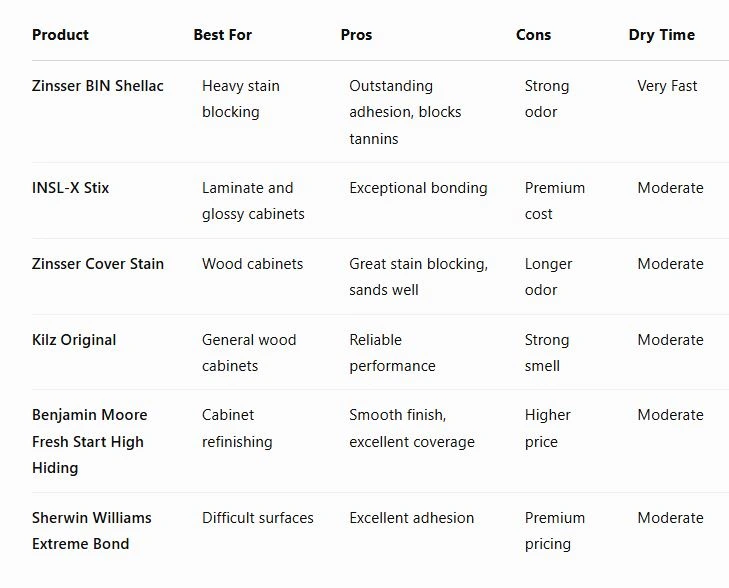
Professional painters often choose products based on the cabinet material rather than brand loyalty. According to Trucoat Painting Plus, matching the primer to the substrate consistently produces better long term results than simply purchasing the most expensive option.
Book Free estimate now!
Schedule a free estimate with our experts at Trucoat Painting Plus to gain insights on your cabinet painting project.
How Professionals Prime Kitchen Cabinets
A durable finish starts long before primer touches the cabinets.
Step 1: Cabinet Preparation
Remove:
- Doors
- Drawers
- Hinges
- Handles
- Pulls
Label every piece so reinstallation is easier later.
Step 2: Cabinet Cleaning
Years of cooking leave behind invisible grease. Use a quality cabinet degreaser to remove:
- Oils
- Wax
- Food residue
- Silicone contamination
Skipping this step is one of the biggest causes of peeling paint.
Step 3: Repairs
Inspect for:
- Dents
- Gouges
- Loose joints
- Cracks
Repair imperfections before priming.
Step 4: Cabinet Sanding
Proper cabinet sanding creates microscopic scratches that improve mechanical adhesion. The goal isn’t removing every old finish. The goal is creating a stable surface.
Step 5: Deglossing
Some factory finishes are extremely hard. Liquid deglossers help remove surface sheen and improve primer performance.
Step 6: Priming
Apply thin, even coats. Avoid heavy application that can cause:
- Runs.
- Brush marks.
- Extended drying.
- Uneven texture.
Professionals frequently spray primer for the smoothest finish, although brushing and rolling can also produce excellent results with careful technique.
Step 7: Dry Time
Respect manufacturer recommendations. Dry to touch does not mean fully cured. Rushing the next coat often leads to reduced adhesion and softer finishes.
Common Primer Mistakes
Most cabinet failures trace back to preparation errors rather than paint quality. Common mistakes include:
- Skipping cabinet cleaning.
- Using wall primer instead of cabinet primer.
- Applying primer too heavily.
- Ignoring dry time.
- Not sanding glossy finishes.
- Using latex primer over difficult surfaces without proper preparation.
- Failing to block stains before painting.
- Assuming new cabinets don’t require primer.
Why do these mistakes happen?
Many DIY tutorials make cabinet painting appear faster than it really is. Professional painters spend far more time preparing surfaces than applying paint because preparation determines the final result.
One mistake many homeowners make is believing primer is optional if they purchase premium cabinet paint. Even self priming paints generally perform better over a properly prepared primer coat, especially during cabinet refinishing.
Book Free estimate now!
Schedule a free estimate with our experts at Trucoat Painting Plus to gain insights on your cabinet painting project.
Expert Tips for Longer Lasting Cabinets
Small details often separate an average paint job from one that lasts for years. Professional recommendations include:
- Clean cabinets thoroughly before every painting project.
- Always test adhesion on an inconspicuous area first.
- Use high quality brushes or spray equipment.
- Allow primer to cure before applying cabinet paint.
- Maintain stable indoor temperatures during painting.
- Avoid excessive humidity during drying.
- Sand lightly between coats when recommended.
- Replace worn hinges that may damage fresh paint.
- Let cabinets cure fully before heavy use.
Even the best primer for kitchen cabinets cannot compensate for poor preparation or rushing the process.
For homeowners planning a larger kitchen remodel, cabinet painting often provides one of the highest visual improvements without replacing cabinetry. A properly primed surface also produces a smoother paint finish, making older cabinets appear significantly newer.
Conclusion
Choosing the best primer for kitchen cabinets isn’t about finding one universal product. It’s about matching the primer to the cabinet material, existing finish and the conditions inside the home. Bonding primers excel on slick surfaces, shellac products stop stubborn stains, oil based primers remain dependable for hardwoods and modern latex options offer convenience when the surface is properly prepared.
Whether you’re refreshing oak, laminate, MDF or previously painted cabinets, careful cabinet preparation, proper cleaning, patient drying and selecting the right primer for kitchen cabinets will have a greater impact on the final result than the paint alone. Trucoat Painting Plus recommends treating primer as the foundation of the project because the finish can only perform as well as the surface beneath it.