$500 Off Cabinet Painting
Vaulted ceilings add drama, light, and a sense of openness to a home, but many homeowners struggle with how to paint vaulted ceilings correctly. The height, angles, and hard to reach areas make this project very different from painting standard ceilings. Without the right approach, uneven coverage, streaks, and safety issues can quickly become a problem.
Trucoat Painting has helped homeowners paint vaulted ceilings safely and efficiently. This blog explains how to paint vaulted ceilings step by step, from preparation to the final touches.
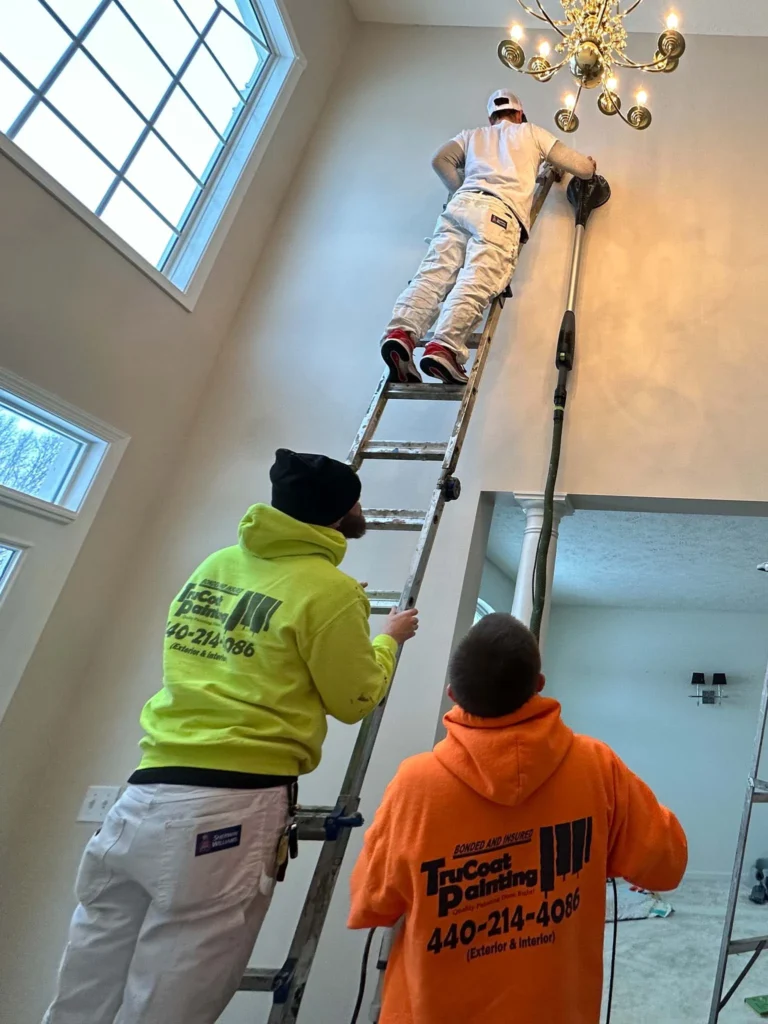
Understanding Vaulted Ceilings
Vaulted ceilings differ from standard flat ceilings in multiple ways, and recognizing these differences is critical before you start painting.
Why Vaulted Ceilings Are Unique
- Height: Vaulted ceilings often soar 12 feet or more, making them hard to reach.
- Angles and Slopes: Most are not flat, so a roller can’t always cover all areas evenly.
- Visibility of Imperfections: Paint flaws and uneven textures show more on high, angled surfaces.
- Lighting Effects: Angled surfaces reflect light differently, making streaks or uneven coverage more noticeable.
Painting vaulted ceilings is as much about preparation and technique as it is about applying paint. Understanding these challenges will save time, money, and frustration.
Tools and Materials You’ll Need
Having the right tools is not optional, it’s essential. Attempting to paint a vaulted ceiling with inadequate equipment often leads to uneven coverage, drips, and unnecessary headaches.
Essential Tools
- Quality Paint: Latex interior paint is ideal. It dries quickly, cleans up easily, and provides a smooth finish.
- Rollers with Extension Poles: Reduce ladder use and allow more consistent coverage.
- Angled Brushes: Perfect for cutting in edges around beams, trim, and corners.
- Ladders or Scaffolding: Safety and stability are critical when working at heights.
- Drop Cloths: Protect your flooring, furniture, and fixtures from paint splatter.
- Painter’s Tape: For crisp lines along walls, trim, and beams.
- Primer: Necessary for covering stains, repairing drywall, or changing ceiling color.
- Sandpaper or sanding blocks: Smooth out imperfections before painting.
With these tools, your process will be efficient, safer, and more professional looking.
Preparing the Room
Preparation is the step most homeowners skip, but it’s the key to a flawless finish. Skipping prep leads to streaks, uneven coverage, and visible imperfections.
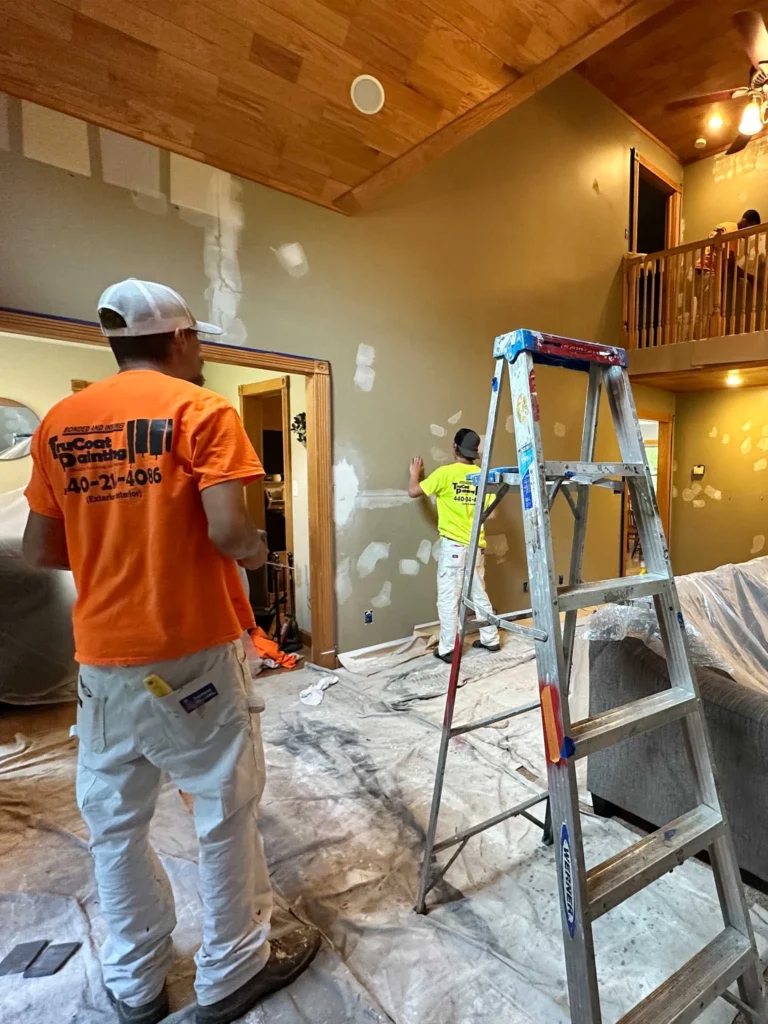
Step 1: Protect Furniture and Flooring
- Move furniture out of the room if possible.
- Cover remaining furniture and floors with durable drop cloths.
- Tape along walls, light fixtures, and trim for crisp edges.
Step 2: Clean the Ceiling
- Remove dust, cobwebs, and any surface dirt.
- A clean surface ensures proper adhesion and avoids peeling or bubbling later.
Step 3: Repair Imperfections
- Fill holes or cracks with spackle or joint compound.
- Sand uneven areas smooth for an even final finish.
- Replace or repair any damaged drywall before painting.
Proper preparation is the foundation of a professional looking ceiling.
Priming Vaulted Ceilings
Priming is essential if your ceiling has stains, new drywall, or a major color change. Primer ensures the paint adheres properly and gives a uniform color finish.
When to Prime
- Stained or discolored ceilings.
- Water damage spots.
- Fresh drywall installation.
- Switching from a dark color to a lighter shade.
Priming Tips
- Use a high quality primer suitable for ceilings.
- Apply with a roller and an extension pole for efficiency.
- Cut in edges with an angled brush to avoid missed spots.
Priming may add time, but it significantly improves the final result and longevity of your paint job.
Step by Step Process for How to Paint Vaulted Ceilings
Vaulted ceilings require a systematic approach. Following a clear sequence ensures smooth coverage without drips, streaks, or uneven color.
Step 1: Cutting In Edges
- Use an angled brush to carefully paint along corners, beams, and trim.
- Work in small sections to maintain wet edges.
- Avoid dragging the brush too far to prevent streaks.
Step 2: Rolling the Main Surface
- Use a roller with an extension pole.
- Start at one corner and work in sections.
- Roll in overlapping strokes for consistent coverage.
Step 3: Apply Additional Coats
- Wait for the first coat to dry completely.
- Inspect for uneven spots or missed areas.
- Apply a second coat for full coverage and a polished finish.
Step 4: Touch Ups
- Check edges, corners, and high spots after drying.
- Use a small brush for precise touch ups.
- Remove painter’s tape carefully to avoid peeling paint.
Following this sequence minimizes mistakes and ensures a professional outcome.
Book Free estimate now!
Schedule a free estimate with our experts at Trucoat Painting Plus to gain insights on your cabinet painting project.
Safety Tips for High Ceilings
Safety is non-negotiable when painting vaulted ceilings. Falling from height is a serious risk, and overreaching is a common cause of accidents.
Key Safety Measures
- Use stable ladders or scaffolding: Never lean ladders unsafely.
- Wear protective gear: Safety glasses, gloves, and masks prevent injuries and inhalation of dust or fumes.
- Avoid overreaching: Move the ladder or scaffolding rather than stretching.
- Have a partner: A second person can hold ladders, pass tools, or assist in emergencies.
By prioritizing safety, you reduce risk and make the painting process smoother and more efficient.
Choosing the Right Paint Color and Finish
The color and finish of your vaulted ceiling can dramatically affect the room’s mood, perception of space, and lighting.
Color Considerations
- Light Colors: White, cream, or soft pastels make rooms feel larger and brighter.
- Darker Colors: Can create a cozy, intimate atmosphere but may emphasize imperfections.
- Accent Colors: Painting beams or ceiling edges in a contrasting color adds visual interest.
Finish Options
- Flat or Matte: Hides imperfections and reduces glare on angled surfaces.
- Eggshell or Satin: Slight sheen, easier to clean, suitable for living spaces.
Selecting the right color and finish ensures the ceiling complements the room’s overall design.
Common Mistakes to Avoid
Even seasoned painters can make mistakes when tackling vaulted ceilings.
Avoid these pitfalls
- Skipping prep: Dirt, dust, or cobwebs will show through paint.
- Using low quality tools: Cheap rollers leave lint and uneven coverage.
- Overloading the brush or roller: Leads to drips and runs.
- Ignoring safety: Falls and injuries are common without precautions.
- Rushing: Precision is more important than speed for a clean finish.
Being mindful of these mistakes ensures your vaulted ceiling looks professional and lasts for years.
DIY vs Professional Painting
While some homeowners attempt DIY, vaulted ceilings are often best left to professionals. The height, angles, and complexity require experience and proper tools.
Benefits of Hiring a Pro
- Experience: Professionals know how to handle angles and tricky spots efficiently.
- Equipment: Access to scaffolding, extension poles, and commercial-grade rollers.
- Efficiency: Faster completion without sacrificing quality.
- Long Term Results: Proper prep and painting techniques extend the life of your finish.
Trucoat Painting’s trained crews specialize in vaulted ceilings, delivering flawless results while protecting your home and minimizing disruption.
Final Tips for a Professional Finish
- Take Breaks: Painting ceilings is physically demanding; plan intervals to avoid fatigue.
- Check Lighting: Inspect the paint in different lighting conditions to catch streaks or uneven coverage.
- Maintain Wet Edges: Work in small sections to prevent lap marks.
- Clean Tools Immediately: Avoid dried paint on brushes and rollers for better results next time.
Vaulted ceilings may seem intimidating, but with the right tools, preparation, and process, you can achieve a stunning finish. Whether you do it yourself or hire professionals, understanding the steps ensures a clean, durable, and beautiful result.